What draws you to a home at first glance? In Palos Verdes Estates, it is often the architecture, the way a house sits into the hillside, or how it frames the ocean. If you are exploring this market, understanding the signature styles will help you read listings faster, spot value, and plan for upkeep. In this guide, you will learn the key styles that define Palos Verdes Estates, how each one lives, and what to watch for during your search. Let’s dive in.
Why PVE looks the way it does
Palos Verdes Estates began as a planned residential community in the early 1920s. The original plan favored curving streets, coastal views, and homes that work with the natural topography. That legacy is why you see view-oriented lots, mature trees, and winding roads today.
Early homes followed Southern California revival styles, especially Spanish Colonial and Mediterranean. As the peninsula grew mid-century, Ranch and Modern homes appeared, followed later by custom view estates on larger or ridge-top parcels. The city also uses design review in some areas, so exterior changes and additions can face neighborhood-level review. If you plan a major remodel, you should factor that process into your timeline.
Signature styles in Palos Verdes Estates
Spanish Colonial Revival and Mediterranean
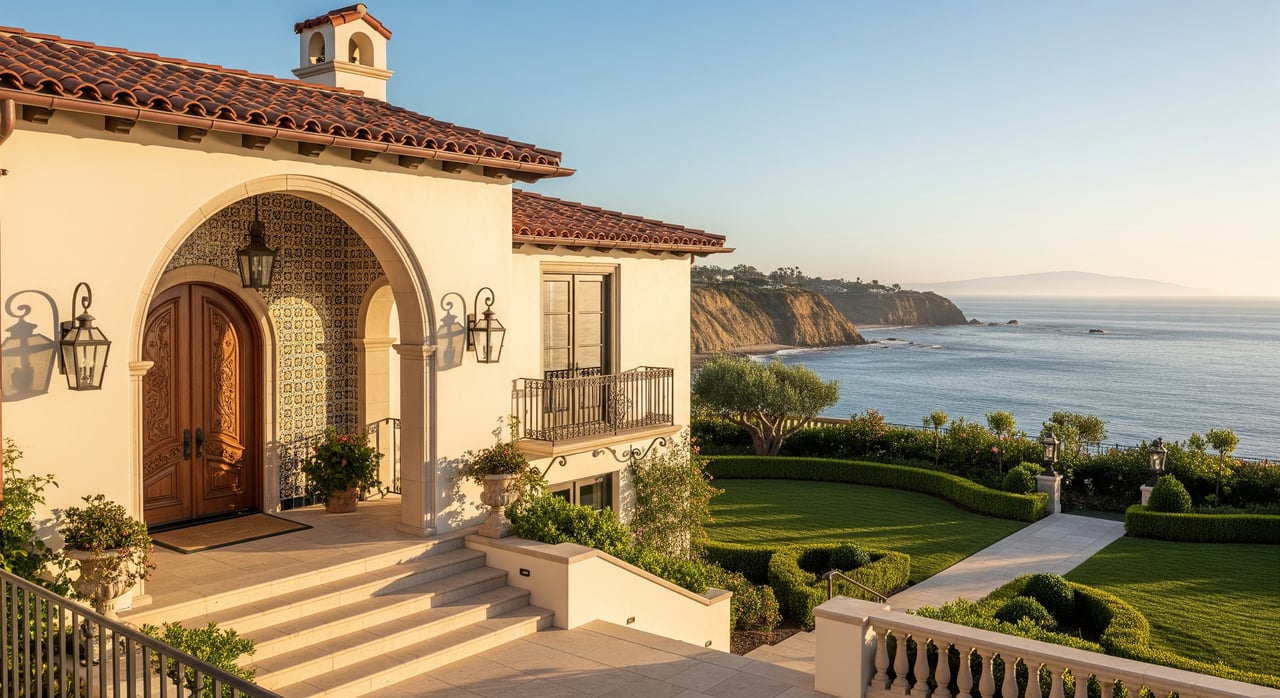
You will spot white or light stucco, red clay tile roofs, arched openings, and wrought-iron details. Many have small courtyards, tiled stairs, and asymmetrical facades. Inside, look for plaster walls, arched passages, tile or hardwood floors, and fireplaces with decorative surrounds.
Maintenance is straightforward but predictable. Clay tile roofs last a long time yet are heavy and may require reinforcement on older homes. Stucco needs periodic inspection, and metalwork near the coast can corrode over time. Lifestyle-wise, courtyards and loggias create private outdoor rooms that suit relaxed, low-to-moderate yard maintenance.
Coastal Ranch and California Ranch
Ranch homes became popular in the mid-twentieth century. Many are single level with low-pitched roofs, wide eaves, and big picture windows. Sliding doors often open to patios and yards, and attached garages are integrated into the front elevation.
Inside, you will find easy circulation, built-in cabinetry, and a focus on indoor and outdoor flow. Original windows can be less energy efficient, and roofs vary from composition to tile depending on updates. Single-level living is the key draw, along with renovation potential if you want to open spaces or modernize systems.
Mid-century Modern and post-war Modern
These homes favor clean lines and light. Exteriors often show flat or low-pitched roofs, post-and-beam construction, and large panes of glass. Many include carports or integrated garages with minimal ornament.
Interiors lean open, with clerestory windows, exposed structure, and a simple palette of wood, stone, and glass. The look is timeless, but you should check window seals, frames, and mechanical systems. Coastal exposure can affect metal components, and original electrical or HVAC may need upgrades.
Custom view estates and contemporary luxury
On ridge lines or larger parcels, you will see multi-level homes built to capture views. Expect significant glazing, terraces, mixed materials like glass, stucco, stone, and metal, and long driveways or gated entries. Outdoor living areas and pools are common.
Inside, these homes prioritize entertaining and privacy. Large kitchens, multiple living levels, and primary suites with panoramic vistas are typical, with elevators in some. Upkeep is higher due to complex systems, terraces, pools, and extensive landscaping.
Period revival and cottage variants
You will also find pockets of Craftsman, Tudor, and cottage-like homes on smaller lots. These offer historic charm and an intimate street presence with mature landscaping. They can appeal if you value scale, character, and a quiet neighborhood feel.
How style and site affect value and living
In Palos Verdes Estates, views carry significant weight. Ocean and harbor sightlines, their quality, and their permanence often drive price. A home’s style matters, but orientation and lot position usually come first.
Lot size and topography shape both value and complexity. Hillside and ridge lots offer bigger views and the potential for custom estates, but they also require more engineering and maintenance. Flat or shallow lots often host ranch and period homes that can be easier and less costly to remodel.
Floor plan and livability are practical filters. Single-level homes appeal to anyone seeking fewer stairs. Multi-level view homes can trade some accessibility for sweeping vistas and entertaining spaces. Older Spanish and early ranch houses bring character, yet kitchens, plumbing, electrical, and windows may need modernization. Some exterior changes may also face design review in sensitive areas.
Maintenance costs relate to both style and the coastal setting:
- Stucco and clay tile roofs benefit from periodic inspections.
- Coastal metal components are prone to corrosion, so check railings, flashing, and window frames.
- Large glass walls can reduce thermal performance if dated; seal and frame condition is important.
- Hillside homes can require slope stabilization, drainage management, and retaining wall upkeep.
Regulations connected to bluffs, slopes, and design review can limit additions or exterior changes in certain locations. If you plan a build or major remodel, loop in the city planning office early in the process.
What to look for in listing photos
Use a quick visual checklist to decode style and potential upkeep:
- Roof form and material: clay tile suggests Spanish or Mediterranean; low-pitched gable or hip with wide eaves points to ranch; flat planes and wide glazing hint at modern.
- Windows: arched or narrow vertical windows often signal Spanish influence; large picture windows or floor-to-ceiling glass suggest a view focus and modern design.
- Entry and flow: a courtyard or recessed arch reads as Mediterranean; a long horizontal layout with an attached garage facing the street is often ranch; stacked terraces and large glass walls usually mean a view estate.
- Outdoor spaces: look for courtyards, expansive patios, pools, and integrated decks.
- Red flags: patched stucco, uneven roof tiles, rust on rails or frames, sagging gutters, visible erosion, or prominent retaining walls that warrant further inspection.
Inspection priorities by style and site
Plan your due diligence around both the architecture and the lot:
- Coastal and corrosion check: inspect metal flashing, railings, HVAC housings, and fasteners for salt exposure.
- Roof and stucco: review tile underlayment, roof age, and stucco cracks, especially on older homes.
- Structure and slope: for hillside lots, order a geotechnical review and evaluate retaining walls, drainage, and any prior slide remediation.
- Glass systems: confirm the condition of large window walls and sliding systems; replacement can be a major budget item.
- Systems and energy: older homes commonly need panel upgrades, insulation, and modern HVAC.
- Historic context: if the property sits in a conservation or review area, verify what exterior changes are allowed.
Choose a style that fits your lifestyle
Think about day-to-day living and future plans:
- For single-level living with easy circulation: look at Ranch or single-level Mediterranean homes.
- For indoor and outdoor entertaining with big views: consider modern, mid-century, or custom view estates with terraces and extensive glazing.
- For lower yard maintenance: Mediterranean courtyards and drought-tolerant plantings can reduce lawn care.
- For privacy: courtyard-front Mediterranean designs and larger estate lots tend to feel more secluded.
- For a connected neighborhood feel: smaller period cottages typically engage the street more closely.
Renovation, resale, and permissions
Homes that pair coastal character with strong view orientation tend to hold broad appeal. That said, floor plan flexibility and modern systems can make or break marketability. If you plan a remodel, understand that hillside or historically sensitive properties may face design review and longer permit timelines.
Budget wise, plan for potential geotechnical work on slopes, drainage improvements, and materials that resist coastal exposure. Energy upgrades like insulation, efficient glazing, and updated HVAC can improve comfort and resale. Consider the local microclimate when planning window replacements or solar orientation.
Your next step in Palos Verdes Estates
If a style has captured your attention, the next move is to see how it lives in person. Touring a Spanish courtyard at golden hour or a glass-walled great room at sunset can clarify what fits your routine and budget. You will also want candid guidance on view permanence, design review, and renovation implications before you write an offer.
For tailored advice and access to both on-market and discreet opportunities, connect with Luis Gonzalez. With deep local knowledge, marketing-first strategy, and skilled negotiation, Luis can help you target the right homes and protect your value from first look to closing. Ready to get started? Schedule a Confidential Market Consultation with Luis Gonzalez.
FAQs
Which Palos Verdes Estates home styles best maximize ocean views?
- Multi-level contemporary homes and mid-century modern designs with large glazing and terraces are optimized for views, but lot orientation is equally important.
Are clay tile roofs on Spanish or Mediterranean homes high maintenance?
- Clay tile roofs are durable and long lived, yet heavier and more costly to repair than composition roofs, so plan for periodic inspections.
Do hillside or bluff-top homes in Palos Verdes Estates carry special risks?
- Yes. Erosion, slope stability, drainage, and setback rules can affect both maintenance and future changes, so obtain a geotechnical review early.
Will historic or period homes in Palos Verdes Estates limit remodel options?
- Possibly. Some areas have design review or preservation overlays that guide exterior changes; verify requirements before planning a major renovation.
How much does a view premium matter when pricing in Palos Verdes Estates?
- Views are a major value driver; the premium depends on sightline quality, obstruction risk, and perceived permanence. Always confirm potential future obstructions.